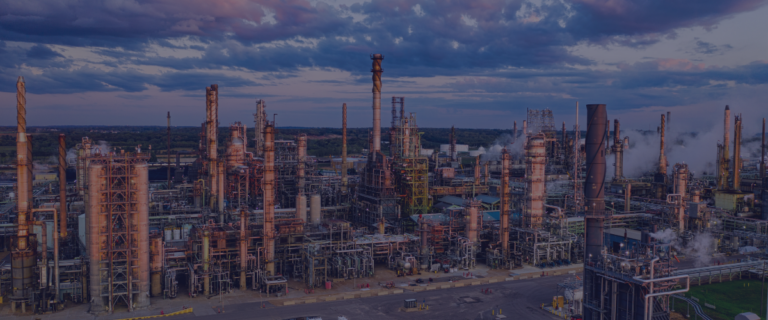
Optimization is widely seen as a direct path to better performance in industrial plants, improving efficiency, increasing throughput, and making better use of assets.
In practice, this often means pushing systems closer to their limits: higher loads, tighter margins, and more precise control.
But what if optimization doesn’t just improve performance…
and actually changes the way a plant degrades?
Optimization changes more than performance
We optimize plants to run closer to their limits. But optimization does not just improve performance, it also changes the conditions under which the plant operates. Higher heat flux and velocities, tighter temperature approaches, and operation closer to constraints.
These shifts increase efficiency. But they also push the system into conditions where degradation becomes much more sensitive.
Degradation does not behave linearly
Fouling and corrosion are not linear. They often follow threshold behavior. At first, the impact is limited. Then a threshold is crossed, and things start to accelerate. At that point, a small increase in severity can result in a disproportionate increase in fouling and degradation rates.
In most plants, however, this transition is not directly visible.
What we don’t see, we don’t control
Fouling shows up as performance loss. Corrosion is estimated from inspection. Catalyst activity is often assumed. As a result, operating conditions are adjusted very precisely, while degradation only becomes visible through delayed performance loss.
We optimize precisely, but degrade approximately.
When models and reality diverge
Most optimization models still assume clean heat transfer, stable hydraulics, and nominal catalyst activity. As the plant degrades, those assumptions slowly stop being true. The model continues to behave as expected, while the plant does not.
The result is a gradual misalignment between optimized operation and physical reality.
Short-term gains, long-term consequences
In the short term, gains are easy to see:
- Higher throughput
- Better energy efficiency
Over time, however, the effects accumulate behind the scenes:
- Increasing fouling
- Shortening run lengths
- Rising energy demand
When the system pushes back
Eventually, this misalignment is no longer gradual. It starts to show up in operations. Pressure drop becomes too high. Heat transfer is no longer sufficient. The unit can no longer be sustained.
What started as a small shift in operating severity ends in an unplanned shutdown.
So what are we really optimizing for?
These events are rarely linked back to how the plant was being pushed. But when degradation is not understood while intensifying the process, they are often a direct consequence of it.
Optimization improves performance.
But without visibility into degradation, it may be pushing the plant in the wrong direction, without us realizing it.