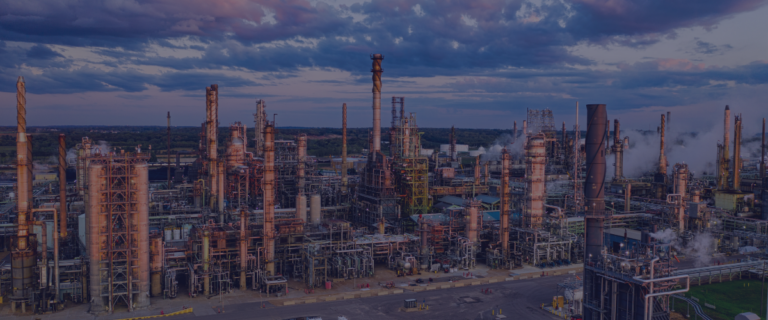
Modern chemical plant design contains a structural tension that often remains invisible. Systems optimized for maximum efficiency can gradually become fragile when degradation mechanisms remain unquantified. In this article, Ernst shares his perspective on why this happens and why it matters for long-term plant performance.
This “design for efficiency” philosophy dominates feasibility studies, FEED packages, technology licensing, and capital allocation decisions, especially in large-scale sectors like petrochemicals, refining, ammonia, methanol, and bulk polymers.
And it works. Under clean, nominal conditions.
But there is a structural tension embedded in this model.
Optimization assumes stability. Reality is dynamic.
Corrosion increases hydraulic resistance.
Fouling reduces heat transfer coefficients.
Catalysts lose activity over time.
Instrumentation drifts.
These mechanisms rarely trigger immediate failure. Instead, they erode performance gradually (and often invisibly). When systems are engineered for ideal performance with minimal redundancy, degradation does not simply reduce efficiency. It narrows margins.
From theoretical efficiency to practical fragility
The consequences are cumulative:
- Energy intensity increases
- Emissions creep upward
- Process controllability narrows
- Shutdown risk rises
In short: Unknown degradation effects turn theoretical efficiency into practical fragility.
When degradation kinetics remain invisible, optimization models gradually drift away from physical reality. The performance assumed at design stage no longer reflects the condition of the plant. Efficiency gains achieved on paper slowly dissolve in practice.
The digital optimization paradox
Meanwhile, the industry is accelerating its digital transformation. Advanced Process Control and Real-Time Optimization continuously adjust setpoints to maximize throughput and margin. Plants generate more operational data than ever before.
Yet a fundamental question remains:
Are we accurately quantifying these degradation effects or are we optimizing against assumptions that are no longer valid?
Making degradation visible
Live degradation data, corrosion rates, fouling resistance, catalyst activity trends, changes the equation. It shifts degradation from a maintenance afterthought to an operational variable. It restores alignment between digital optimization and actual plant condition.
Efficiency does not need to create fragility.
Without visibility into degradation, highly optimized plants operate with a structural blind spot.
Looking ahead
But there is an even deeper structural tension. Not only between design assumptions and physical reality, but between short-term production targets and long-term robustness.
In the next article, we explore this deeper tension and what it means for the way industrial plants are operated and optimized.