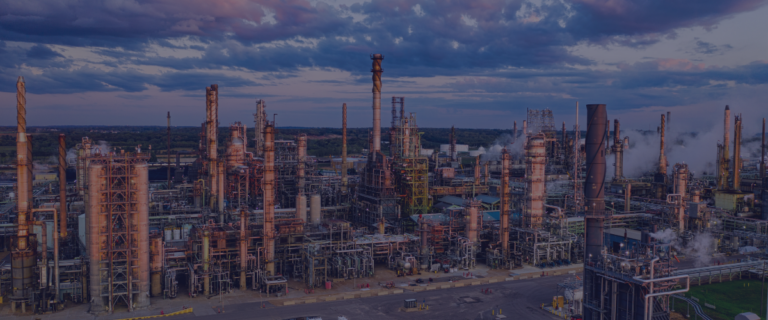
In most industrial plants, fouling inside heat exchangers, pipelines and reactors develops out of sight. As a result, teams often rely on indirect signals and experience to understand what is happening inside the process.
But what happens when fouling itself becomes visible?
When organizations start measuring fouling behavior in real time, the way plants understand, discuss and manage fouling begins to change.
What happens when fouling becomes visible?
When organizations start measuring fouling behavior in real time, something interesting happens. The discussions inside the plant begin to change. Not slowly, but almost immediately. Because for the first time, teams are no longer discussing assumptions. They are looking at the same facts!
Operators can see when fouling actually starts to develop. Engineers can analyze which process conditions accelerate it. Maintenance teams can see how fouling evolves between cleaning cycles. And management can finally understand the real operational and economic impact.
This shift may sound small, but in practice it changes the entire dynamic around fouling inside a plant.
When departments interpret the same problem differently
In many organizations, fouling discussions traditionally follow a familiar pattern. Operations notices declining performance. Maintenance suspects fouling. Engineering tries to analyze historical data.
But because fouling itself is not directly visible, every department interprets the situation slightly differently. Operations might argue the process is still stable. Maintenance might insist cleaning is needed immediately. Engineering may believe the problem is caused by a process condition change.
None of these perspectives are necessarily wrong. But they are all interpretations of indirect signals. When fouling becomes measurable, those interpretations suddenly become verifiable.
Instead of debating what might be happening, teams can observe what is actually happening. And that changes the conversation.
Challenging long-standing assumptions
One of the first things organizations often discover is that many of their existing assumptions are only partially correct. Cleaning cycles that were assumed necessary turn out to be too conservative. In some cases equipment is cleaned long before fouling has reached a level that actually affects performance.
In other situations, the opposite happens. Plants discover that fouling develops much earlier than expected, but the symptoms only become visible later. By the time operators react, efficiency has already been declining for days. Real-time insight exposes both types of inefficiencies.
Understanding how process conditions influence fouling
Process engineers often experience a second type of insight. Certain process conditions that were believed to be stable may turn out to accelerate fouling.
A slightly higher temperature.
A small shift in flow rate.
A change in product composition.
Individually these changes might seem insignificant. But when fouling behavior is monitored continuously, their impact becomes measurable. Suddenly engineers can see how process decisions influence fouling formation. What previously required weeks of historical analysis can now be observed directly.
Discovering the hidden impact of equipment design
Sometimes the most surprising insights come from looking at older design decisions. Equipment that has always required frequent cleaning suddenly reveals why. Certain geometries may promote fouling accumulation. Flow patterns inside heat exchangers may create zones where deposits build up faster. Process layouts designed years ago might unintentionally accelerate fouling under certain operating conditions.
These are not problems that become obvious from standard process data. But when fouling itself becomes visible, they start to appear.
Better decisions through real-time fouling insight
What changes most in these situations is not necessarily the equipment. The plant itself may remain exactly the same. What changes is the quality of decision-making. Cleaning schedules can be based on actual fouling development instead of fixed intervals. Process adjustments can be evaluated based on their real impact on fouling behavior. Maintenance interventions can be planned earlier, before fouling causes serious disruption.
And management finally gains a clearer understanding of the true costs associated with fouling:
- Energy losses.
- Cleaning costs.
- Lost production capacity.
From assumption to insight
But perhaps the most important change is cultural. When fouling becomes visible, discussions shift away from opinions. Teams stop debating what they think might be happening. Instead, they start exploring what the data actually shows.
And that shift; from assumption to insight; is where real optimization begins.
Because once organizations understand how fouling behaves in their processes, they can stop managing it through work-arounds. They can start managing it through understanding. And that is where the real opportunity lies.